Founder Spotlight · September 2026
The Bees Are One Flower at a Time: Building Differently with Dallas
By Shayne Swift — SwiftLyfe Coaching & Consulting
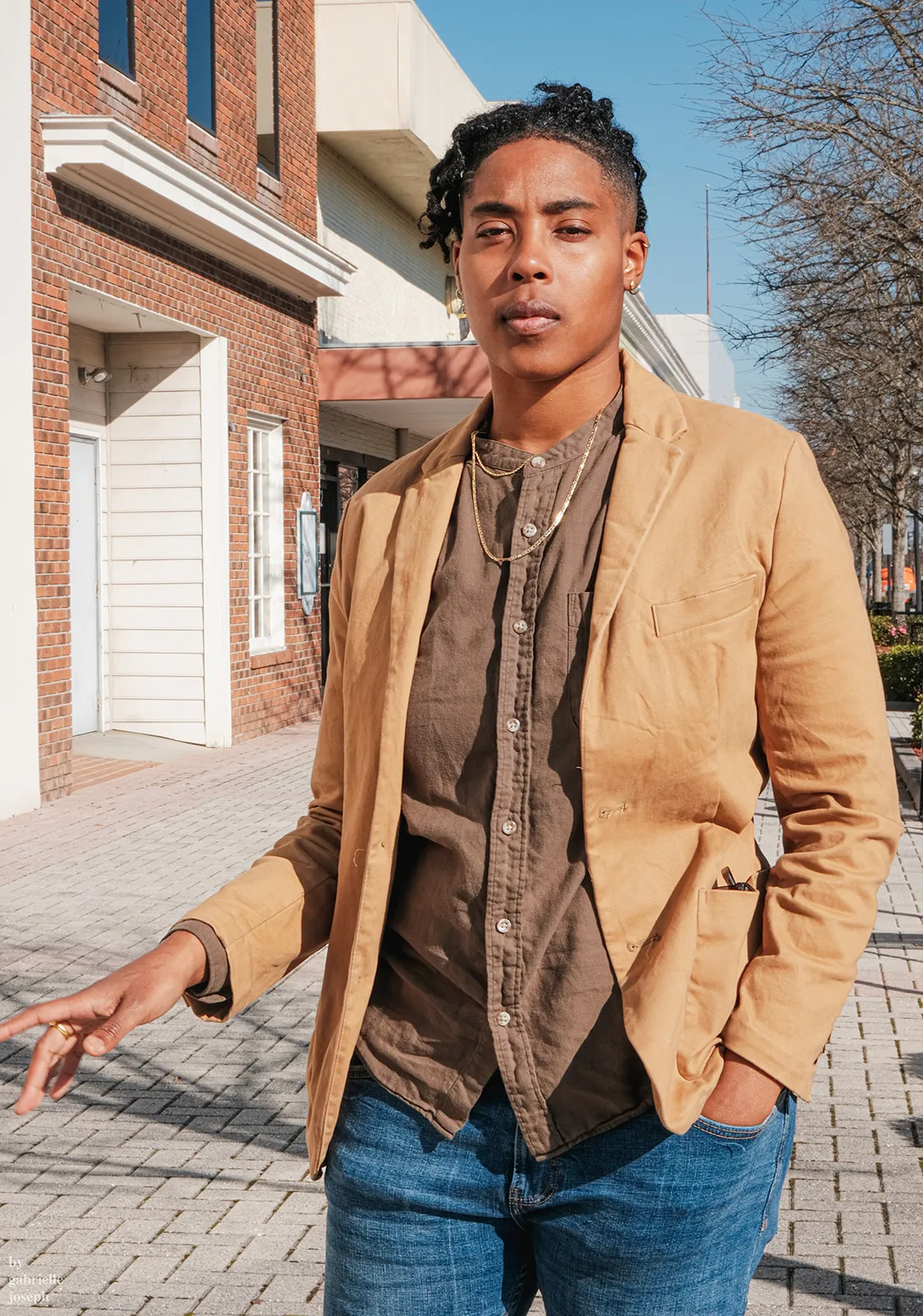
Featured Founder #1
Dallas
Harriet Tubman Freedom Farm & The Garden Salon
Dallas brings together land stewardship, agriculture, writing, creativity, reflection, community, and liberation. Her work is rooted in BIPOC food justice and the belief that creativity is not something you do after the real work — it is the work.
🎬 Interview Clip
“The bees are one flower at a time.”
Dallas said this during our conversation for the first founder feature of The ADHD Entrepreneur Collective. I had asked her what working with the land had taught her about working with her ADHD brain. She started talking about how nature is not linear. There is variation everywhere. Trees are rooted. Things move with the breeze. Then she talked about the bees.
One flower at a time.
I have been thinking about that sentence ever since. Maybe because I spend so much time working with entrepreneurs with ADHD who can see the whole garden. We see possibilities, connections, projects, things that could become other things, businesses inside businesses, and ideas that connect to other ideas before we have finished explaining the first idea.
The challenge is not always learning how to see less. Sometimes it is learning how to choose the flower we are on.
Dallas understands something about gardens.
The Roots Were Already There
Dallas is the owner and operator of the Harriet Tubman Freedom Farm and The Garden Salon. She spent years working in youth development and food justice nonprofits before turning toward entrepreneurship.
Through the farm, Dallas brings together agriculture, agroecology, education, community, and land stewardship. Through The Garden Salon, she facilitates writing experiences centered on meditation, reflection, healing, and political education.
Those might sound like two very different businesses. Spend some time talking to Dallas and they make perfect sense together.
The roots go all the way back to little Dallas. She remembers being a curious child who loved playing in the dirt. She would dig holes in the backyard to see what she could find. She loved animals, science, nature, writing, and journaling. Her family nurtured a relationship with travel, hiking, and the natural world.
Those interests did not disappear as she got older. Like many of us, however, Dallas received messages about which interests counted as serious work and which belonged somewhere around the edges of adult life. Creativity was something you did after the work was done.
Then agriculture disrupted that story.
After college, a former acquaintance repeatedly encouraged Dallas to participate in a BIPOC farmer immersion program at Soul Fire Farm. Dallas resisted at first. She had a real job. She did not have time for this. Eventually, she reached a point where she was deeply unhappy with what she was doing and decided to go.
It changed her life.
Dallas learned more about the agricultural knowledge, ingenuity, and resistance of Black people. She encountered histories of growing food not simply as agriculture, but as community care, political resistance, creativity, and survival.
She also started seeing farming differently. Growing food was an art form. There was creativity in laying out crops, planting flowers, working with colors across a season, observing the land, and eventually taking something that began as a seed and eating the fruit it produced.
That realization opened something. If growing food could be creative work, what other parts of herself had she dismissed because they did not fit her definition of “real” work?
Writing was there. Storytelling was there. Music was there.
Eventually, The Garden Salon emerged from that exploration. The farm and The Garden Salon were not two unrelated ideas. One had helped cultivate the other.
What Looks Scattered Might Actually Be an Ecosystem
I recognized that immediately. I have seen versions of it in my own entrepreneurship and in my coaching work with other entrepreneurs with ADHD.
Traditional business advice often tells us to narrow, pick one thing, choose a niche, and focus. Sometimes that is exactly what we need to do. Sometimes it is not.
ADHD brains can be highly associative. One idea connects to another. A professional skill connects to a creative interest. Something we experienced ten years ago suddenly becomes relevant to the thing we are creating today.
From the outside, that can look scattered. From inside the person's brain, there may be a very clear thread.
The question is not always, “How do I make myself interested in fewer things?” Sometimes the better question is, “Which of these things actually belong together?”
Dallas's farm and writing practice belong together because they are both about cultivation, connection, creativity, nourishment, and freedom. She did not need to choose between them to make her entrepreneurial identity easier for somebody else to understand. She needed to understand the thread.
What ADHD Brings to the Business
One thing I want The ADHD Entrepreneur Collective to do is complicate the way we talk about ADHD and work. If we only discuss deficits, we miss too much.
When I asked Dallas how ADHD shows up as an asset in her businesses, she described how well land stewardship works with parts of her brain.
There is always something new happening in a garden. Something has changed since yesterday. There is a new problem to solve, a pattern to notice, something growing, or some creature deciding that Dallas planted those tomatoes specifically for them.
There is novelty and challenge. There is also science. Dallas lights up talking about soil. She told me she has been looking at microscopes because she wants to be able to examine what is happening in her soil over time.
Then there is The Garden Salon. Dallas creates writing prompts for the experiences she facilitates. Someone recently asked her how she comes up with them.
Her answer made perfect ADHD sense to me: “They beam right in the head.”
Sometimes she is walking. Sometimes she is outside. Sometimes she is talking to herself near a river and suddenly the idea arrives.
The nonstop thinking that can feel overwhelming in one environment becomes creative material in another.
That is something worth paying attention to. The same brain can have very different experiences depending on the environment and what we are asking it to do. Curiosity, novelty seeking, creativity, pattern recognition, associative thinking, and intense engagement can become tremendous entrepreneurial assets when they have somewhere meaningful to go.
Then somebody has to update WordPress.
And Then There Is WordPress
This might be my favorite entrepreneurship reality check. You can be brilliant at the thing your business exists to do and struggle tremendously with the machinery required to deliver it.
Dallas can create a Garden Salon experience. She can write prompts. She can facilitate. She can create an environment where people with very different relationships to writing feel comfortable enough to participate.
Then there are the dates, times, listings, scheduling, emails, and website updates.
Dallas told me about increasing the number of Garden Salon sessions she was offering. She created the listings and reviewed them before publishing them. Then the emails started coming. Is it Monday or Wednesday? What time is the session? Information was wrong.
The particularly frustrating part was that Dallas was sure she had checked it. She had read it more than once and simply had not seen the errors.
It would be very easy to take an experience like that and conclude, “I am bad at details.”
Our coaching conversations have helped Dallas begin looking at it differently. She started noticing that her ability to manage those details changes depending on her energy. When she is overtired or stressed, she misses more.
That is different information, and different information gives us different options.
Energy Is Data
If the conclusion is “I am careless,” there is not much to work with except trying harder. If the information is “my accuracy decreases when my cognitive resources are depleted,” now we have data.
We can examine when detail-heavy tasks are happening. We can look at workload. We can create checks. We can decide what requires Dallas and what could eventually be delegated. We can think about how much task switching is happening before she sits down to do administrative work.
Most importantly, we can stop pretending that an exhausted brain should perform exactly like a rested one.
Dallas talked candidly about how difficult it has been to learn to pay attention to her own energy. She also described the guilt that comes with rest because even when she knows she is depleted, there can still be a feeling that she should be doing something.
I see versions of this with entrepreneurs I coach all the time.
We talk constantly about time management in business. I think we need to talk much more about energy.
An hour is not always an hour. The hour when you are rested, interested, and cognitively available is not necessarily equivalent to the hour after a day of decision making, task switching, problem solving, responding to people, and managing a business.
Sometimes the question is not, “Where can I fit this task?” It is, “What version of my brain does this task require?”
That can lead to much more useful conversations about executive functioning. What deserves your best cognitive energy? What drains you? What needs a system? What needs another person? What can wait? What are you repeatedly forcing yourself to do under conditions that almost guarantee it will be harder? What are you continuing to do simply because you believe a “real entrepreneur” should be able to handle it?
That is the kind of work I find myself doing more and more with entrepreneurs.
What the Land Knows About Brains
This brings me back to Dallas and the land.
Dallas was diagnosed with ADHD at 33. At the time of our conversation, she had been living with the diagnosis for about a year. She talked candidly about the mixture of feelings that came with understanding her neurology later in life.
There was gratitude and excitement, but there was also anger and resentment. Looking backward with new information can change how you understand experiences that once seemed like personal failures. Dallas talked about realizing that some of the support she needed was not particularly complicated. She also reflected on the ways children are often pushed to conform to scripts instead of having their natural interests and ways of being nurtured.
Maybe that is part of why her answer about the land was so powerful.
Nature does not seem particularly concerned with our obsession with sameness. There is variation everywhere. Things grow at different rates. There are seasons. Conditions matter. Things need nourishment. A plant struggling in one environment may thrive when its conditions change.
And the bees are one flower at a time.
For an ADHD entrepreneur who can see ten possibilities simultaneously, there is wisdom in that. You do not necessarily need to stop being capable of seeing all ten. That might be part of what makes you good at what you do.
You still need to know which flower you are on. Not forever. Just now.
Rewriting the Story
I ended my conversation with Dallas by asking the question I plan to ask every entrepreneur I feature in The ADHD Entrepreneur Collective: “What story about yourself have you had to rewrite to become the entrepreneur you are today?”
Dallas talked about rewriting the belief that things have to be done a certain way to count. The correct way. The adult way. The fall-in-line way.
She had absorbed the idea that creative pursuits belonged after the real work was finished. You handled the nine-to-five and the adult responsibilities first. Whatever creative energy remained could go toward art, music, or writing.
She is no longer willing to organize her life around that story.
She is also questioning the belief that succeeding requires tolerating people, relationships, or environments that are not aligned with her values. She wants to create work that feeds and heals her while allowing her to offer something nourishing to other people.
That is bigger than a productivity strategy. It is a different definition of success.
Building Around the Brain
I do not believe building an ADHD-friendly business means abandoning deadlines, structure, administrative responsibilities, or the realities of making money. Businesses still need execution.
I also do not believe the answer is forcing every ADHD entrepreneur into the same operating system.
Maybe the entrepreneur with endless ideas does not need fewer ideas. Maybe they need a reliable way to capture them and decide which one gets attention now. Maybe the visionary needs operational support. Maybe detail-heavy work should happen when cognitive energy is strongest. Maybe rest is not what happens after all the work is finished. Maybe it is part of the infrastructure that makes good work possible.
Maybe multiple interests are not automatically evidence that someone lacks focus. Maybe there is an ecosystem there.
Executive functioning support should not be about sanding down all the characteristics that make an ADHD entrepreneur different. It should help create the conditions that allow those characteristics to become something sustainable.
Dallas is the first founder I am featuring through The ADHD Entrepreneur Collective, and she has already given me language I expect to carry into many future coaching conversations.
“The bees are one flower at a time.”
You do not have to stop seeing the whole garden. You just need to know which flower you are tending right now.
About the Founder
Dallas is the owner and operator of the Harriet Tubman Freedom Farm and The Garden Salon. Her work brings together land stewardship, agriculture, writing, creativity, reflection, community, and liberation. She was the first featured founder in The ADHD Entrepreneur Collective, a SwiftLyfe Coaching & Consulting initiative created to amplify the stories and work of neurodivergent entrepreneurs.
🎙️ Full Interview — Behind the Brain
Watch on YouTube →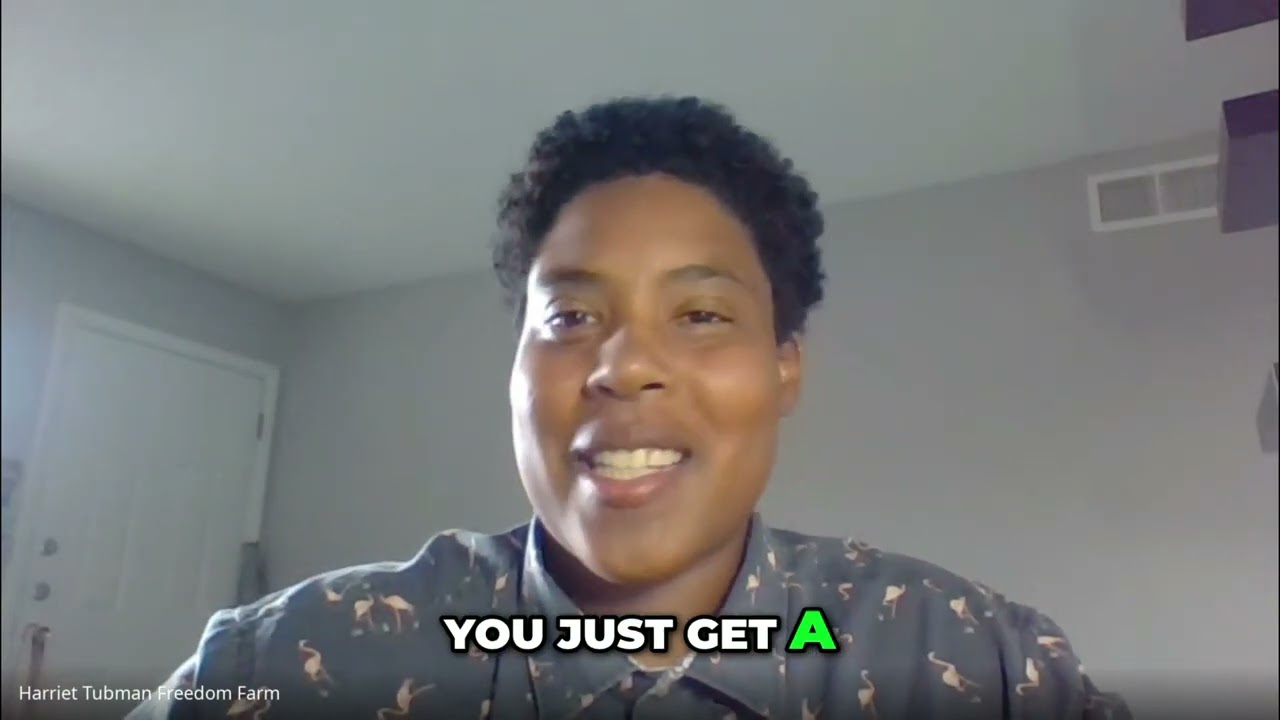
Free Download · No Pressure
ADHD Clarity Starter Guide
A 35-page, shame-free guide to understanding your ADHD—with practical strategies and one small next step to take this week. Completely free.
Get the Free Guide →The ADHD Entrepreneur Collective
Are you an ADHD entrepreneur with a story worth sharing?
This is about celebrating your business — not selling coaching.